What Does Play Actually Mean?
It is a simple question – yet the answer is often different, depending on who you ask.
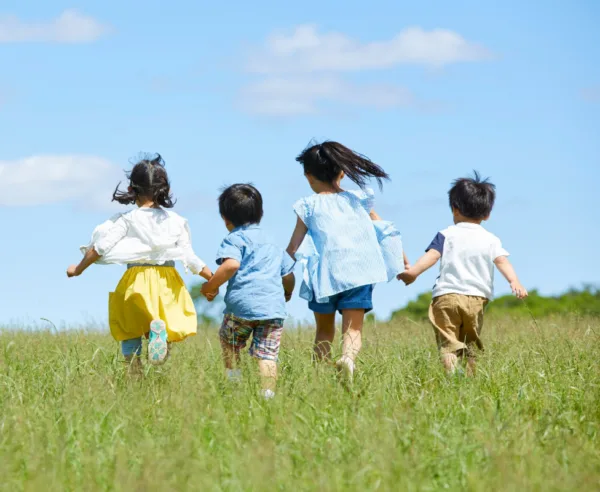
For some, play is children having fun. It is playing a sport or simply “mucking around”. For others, it is exploration, creativity, imagination, problem solving or learning.
But what if I told you that it is all of the above?
A Historic Perspective
For many years, play was viewed as less valuable than academic learning or practical skills.
Children were expected to sit, learn and comply, and play was often seen as a “reward” or as a way to pass time.
This positions ‘play’ not as something optional or extra, but as something essential to childhood itself.
It wasn’t until theorists such as Jean Piaget and Lev Vygotsky highlighted the importance of play in children’s development that society began to understand its true value.
Today, we recognise that play supports both academic learning and practical life skills.
Play as a Misunderstood Concept
Play has become one of the most discussed (and misunderstood) concepts in early childhood education.
It can sometimes be viewed as “Just keeping children busy” or simply allowing children to “have fun”. Yet within play, children are often engaging in complex learning, communication, problem-solving, creativity and social development all at once.
Play can involve:
- “Exploration”
- “Imagination”
- “Social Interaction”
- “Just playing”
- “Learning through experience”.
The truth is that play can also be all of the above at once.
Take 30 seconds to reflect: “What does play mean to you?”
The Importance of Play
Play as a Right, Not a Reward
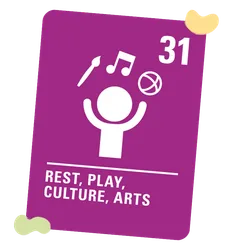
Play is not only recognised as a key approach to learning. It is also recognised as a fundamental right of every child.
The Children’s version of the Convention on the Rights of the Child | UNICEF clearly states in Article 31 that children have the right to:
- Rest
- Leisure
- Play
- and Participation in cultural and recreational activities.
These positions play not as something optional or extra, but as something essential to childhood itself.
How does the EYLF Recognise Play?
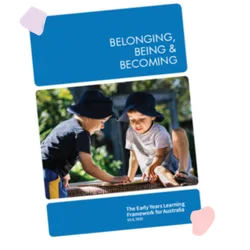
Did you know that when you search the word “play” in the Early Years Learning Framework (EYLF v2.0), it appears over 100 times?
This highlights just how central play is to early childhood education.
Play is not an add-on or an optional activity. It is embedded throughout the framework, shaping principles, practices and learning outcomes.
One of the key practices is “Play-based learning and intentionality.”
So what does that actually mean?
At first glance, these two ideas can feel like they sit in contrast.
Play suggests freedom, exploration and child-led experiences, while intentionality suggests purpose, direction and educator involvement.
However, they are not opposing ideas. Instead, they work together.
Play-based learning is about allowing children to explore, create, experiment and lead their own learning. Intentional teaching is the educator’s role within that play — not to control it, but to thoughtfully guide, extend and support the learning that is already occurring.
This might look like:
- Observing children’s interests
- Asking open-ended questions
- Introducing new vocabulary
- Adding resources to extend thinking
- Supporting problem-solving and collaboration
- Recognising teachable moments within play.
In this way, intentionality does not interrupt play — it enhances it.
The Complexity of Play
Now that we understand the importance of play, there is often a feeling that there is simply not enough time in the day to meaningfully support it all.
When we consider, the complexity of play, it becomes clear that children are not engaging in one single type of experience throughout the day.
Instead, play is flexible, dynamic and constantly shifting in response to children’s interest, sensory needs, energy levels, emotions and environments.
This is why it is so important to understand the different ways play can be experienced, and how we can intentionally support balance within the day.
Is play viewed as one single experience?
No, play is not one single experience. In fact, it takes many forms including:
- Open-ended play
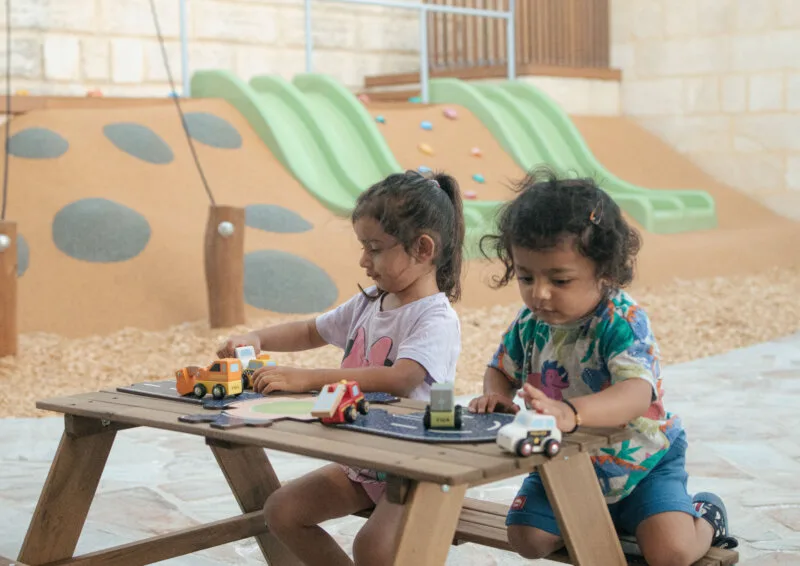
- Sensory and exploratory play
- Imaginative and symbolic play
- Creative play
- Co-operative/social play
- Risky Play
- Outdoor play
- Indoor play
- …and many more!
Across each of these experiences, children naturally move between high-energy and calmer states of engagement.
This is why early childhood environments should intentionally support both a balance of “active” and “quiet” play throughout the day.
When we truly pause and observe it… isn’t the magic of play remarkable?
Now, you might be wondering… why is there a need for balance?
Supporting a balance of active and quiet play provides children with opportunities to engage, regulate, reflect and explore in different ways.
Let’s look at the two categories of play.
Active play experiences may involve:
- Gross motor movement and physical engagement
- Exploring space, speed and coordination
- Building physical confidence and strength
- Expressing energy through movement
- Engaging in shared physical play with others.
Some examples: Climbing, Running, Dancing, Jumping, Obstacle courses, ball games and many more.
Active play supports brain development and wellbeing.
For many children, movement is how they process, regulate and learn.
Quiet play experiences may involve:
- Deep concentration and sustained focus
- Imaginative thinking and creativity
- Problem-solving and reflection
- Emotional processing and regulation
- Independent or small-group engagement.
Example may include: drawing, puzzles, reading, sensory play, small world play and certain forms of construction or imaginative play.
Sometimes the deepest thinking happens during quiet moments of play.
Both active and quiet play experiences play a critical role in supporting children’s holistic development but in different ways. One is not “better” than the other- Children need a balance of both.
It is also important to note that this is not about limiting play into fixed categories but about understanding that children regulate, engage and learn differently across all play experiences.
When Time Feels Limited: How Do We Protect Play?
The overlooked nature of play
In busy early childhood environments, play can sometimes become the part of the day where educators are catching up on tasks, routines or documentation.
Do we unintentionally miss the depth of learning occurring?
How can we maximise play?
Sometimes, maximising play is not about adding more but about reducing the things that unnecessarily interrupt it.
In many early childhood settings, children’s play is frequently interrupted by:
- Too many transitions
- Long transitions
- Unnecessary waiting times
- Overly structured routines
- Excessive group times
- Constant movement between activities
- Lack of resources.
While routines are helpful and necessary, it is also important to reflect on whether every transition or interruption is truly necessary. Transitions like lengthy pack up times or waiting in lines or repeated interruptions and stopping play for routines too frequently disrupt the benefits of play.
If transitions are not meaningful, engaging or contributing to children’s learning, they can unintentionally reduce opportunities for sustained play and deep engagement. They disrupt thinking, concentration and creativity.
How can you make transitions more meaningful?
Making transition more meaningful does not mean removing all transitions.
Instead, it means being intentional about how transitions are used.
Transitions themselves can become opportunities for:
- Movement
- Connection
- Language development
- Music
- Playfulness
- Learning
And these opportunities can be presented through:
- Singing songs whilst transitioning
- Movement games
- Role-play transitions
- Giving children leadership roles
- Interactive routines
These approaches can help maintain engagement while supporting smoother routines.
Let’s Protect Sustained Play!
We now understand that children often need long periods of uninterrupted play time to support their holistic development.
Some of the richest learning occurs when children have the time and freedom to remain immersed in play without constant interruption.
When educators intentionally reduce unnecessary interruptions, play becomes deeper, more complex, more creative and more collaborative.
This invites us to reflect on our daily practice and routines and consider what may be unintentionally taking away from these valuable learning moment.Children’s version of the Convention on the Rights of the Child | UNICEF
A Reflective Question:
If play is where some of the deepest learning occurs, are we protecting enough time for play?
Contact Us
If you would like to explore how these strategies can be brought to life through interactive workshops, mentoring or customised PD sessions, please reach out to the Sector Development Team.
- Phone: 1300 66 11 64
- E-mail: support@childaustralia.org.au
- Online Shop: https://shop.childaustralia.org.au/