
Every meaningful investigation begins with a single spark of curiosity.
Before children test a theory, explore a natural environment or become immersed in a story, they find wonder.
They notice something unexpected, ask a question, make a prediction, or imagine a different possibility.
Curiosity is not simply an interest – it is the spark that ignites investigation.
This August, Book Week and National Science Week provide wonderful opportunities to celebrate children’s natural curiosity and the investigations that follow.
While these events focus on different experiences, they share a common purpose: encouraging children to ask questions, explore ideas, investigate possibilities and deepen their understanding of the world around them.
Whether children are investigating why a character made a particular choice, exploring the life cycle of a butterfly after reading a story, or wondering why shadows change throughout the day, meaningful learning begins with a simple question: “I wonder…”
Why Curiosity Matters in Early Childhood
Curiosity plays an essential place in early childhood education, not only for children but also for the educators who support their learning.
A curiosity-based approach encourages us to move beyond simply delivering knowledge and instead embrace investigation, reflection and meaningful connections.
Curiosity as an Educator
Curiosity begins with You
Instead of rushing to conclusions or judgement, you can pause and ask yourself:
- Why did the child choose that experience?
- What are they trying to understand?
- What might they be communicating through their behaviour?
- How can I extend their thinking and scaffold their learning?
When a child behaves in an unexpected way, curiosity allows you to respond with empathy rather than judgement.
Rather than asking, “How do I stop this behaviour?”, you might instead ask:
“What is the child trying to tell me?” or “What need might they be communicating?”
When you approach children with curiosity, you create opportunities to look beyond the behaviour and understand the child.
Curiosity Within Children
From the moment children enter the word, they are naturally curious. They are driven by an innate desire to make sense of the people, places, patterns and experiences around them.
This curiosity is evident from infancy. Babies observe faces, watch movement and fixate on objects that capture their attention as they begin to interpret the world.
As they grow, they explore through touch, movement and experimentation – grasping objects, turning them over, dropping them, and yes, often putting them in their mouths. Each action is an investigation that helps them build understanding.
As children’s language develops, so too does their curiosity. Endless questions of “Why”?, “How”? and “What if?” become invitations for exploration rather than interruptions to the day.
As an educator, you have an important role in valuing these questions and recognising that they represent deep thinking and genuine inquiry.
When you respond with authentic interest to children’s ideas, theories and questions, you nurture confident learners. Learners who are willing to think independently, solve problems, test their theories and take intellectual risks.
Rather than providing every answer, you have the opportunity to ‘wonder’ alongside children. You can create environments where curiosity is celebrated and investigation becomes a natural part of everyday learning.
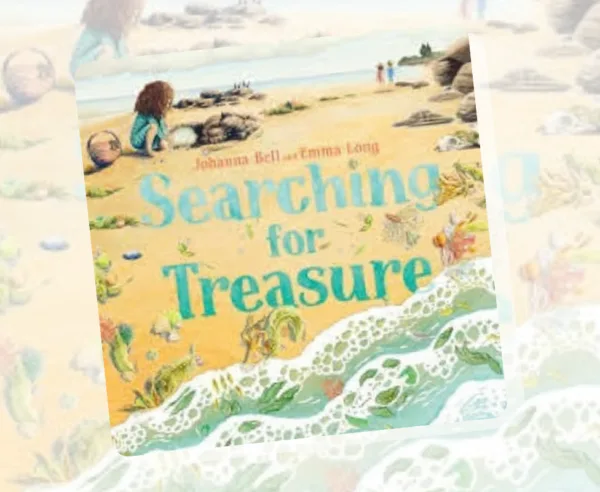
Book Week: Stories that Spark Wonder
curiosity, imagination, conversation and investigation.
Books have the power to speak curiosity, ignite imagination and inspire meaningful investigations.
They invite children to explore ideas and ask questions to make connections with the world around them.
When you are next reading a book to children, I want you think about this…
| Books often encourage children to: |
|---|
| Books often encourage children to:• Imagine different worlds |
| Books often encourage children to:• Ask “What if…” |
| Books often encourage children to:• Consider different perspectives |
| Books often encourage children to:• Predict outcomes |
| Books often encourage children to:• Wonder why characters behave the way they do |
| Books often encourage children to:• Connect stories to their own experiences |
When it comes to reading books with children; it is not about moving from the first page to the last or expecting every child to sit and listen quietly.
Story time is an opportunity to nurture curiosity, encourage critical thinking and create meaningful conversations.
As an educator, you can intentionally pause through a story to invite your little learners into the learning by simply asking questions.
Instead of questions that simply test memory such as: “What colour was the bear?”
I want you to try asking questions that encourage thinking and inquiry.
- “Why do you think the bear made that choice?”
- “What do you think will happen next?”
- “What would have you done?”
- “I wonder why the author wrote it this way?”
The aim is to move beyond comprehension and into inquiry.
Let’s also remember that the way you tell a story can be just as powerful as the story itself.
Your tone of voice, facial expressions, gestures and pauses all play an essential role in capturing children’s attention and sparking their curiosity.
Whispering at just the right moment, widening your eyes in surprise, using different voices for characters or pausing before turning the page – encourages children to predict, wonder and become emotionally invested in the story.
Stories often become investigations in themselves. For example:

Science Week: Curiosity in Action
Science in early childhood isn’t just about experiments with baking soda volcanos or flashy experiments. It’s about supporting children to investigate the world around them
| Children naturally wonder: |
|---|
| Children naturally wonder:• Why does ice melt? |
| Children naturally wonder:• Why do shadows move? |
| Children naturally wonder:• Why do leaves fall? |
| Children naturally wonder:• How do worms breathe? |
| Children naturally wonder:• Why does the moon change shape? |
Science week reminds us that investigation begins long before we provide answers.
Instead of saying: “Here’s what happened….”
You might ask:
- “What do you notice?”
- “What do you think is happening?”
- “How could we find out?”
- “What else could we try?”
This positions you as a co-investigator rather than an expert simply delivering information.
Turning Curiosity into Investigation
Meaningful science experiments don’t need expensive resources or complicated experiments. Often, the richest investigations begin with everyday moments. You might invite children to:

Everyday strategies to Nurture Curiosity and Investigation
Remember to slow down.
Children often ask questions while adults are rushing.
Curiosity needs time.
– Pause the experience
– Go deeper
Real investigations emerge from authentic curiosity!
Key Take Away
Curiosity is more than asking questions! It is the spark that ignites investigation.
As an educator you have the privilege of nurturing this disposition every day, creating environments where children feel confident to wonder, predict, explore and discover.
Whether children are captivated by a story, observing an insect in the garden, or wondering why shadows move across the playground… Your role is not to provide every answer, but to create the conditions where meaningful investigations can flourish.
This Book Week and Science Week, let us celebrate not only what children learn, but the investigations that emerge from their curiosity.
After all, every meaningful investigation begins with a single question, a sense of wonder and the courage to explore the answer.