“Some Secrets Should Never Be Kept”
 Content Warning: This book contains discussions of unsafe touch, secrets and child personal safety that may be sensitive for some children and may require supportive adult guidance during reading.
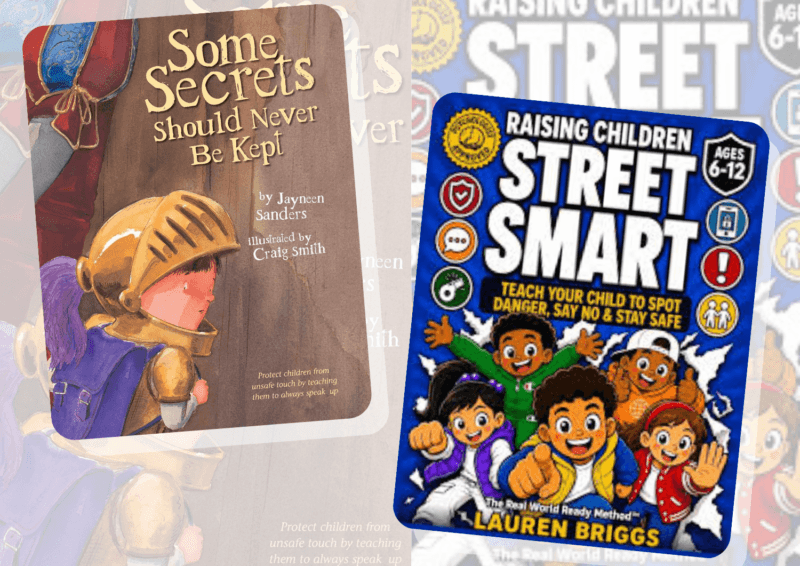
- Title: “Some Secrets Should Never Be Kept”
- Written by: Jayneen Sanders
- Illustrated by: Craig Smith
- Age Group: 3 – 6 years
- Links to EYLF ⤵️
| Principles | Practices | Learning Outcomes |
|---|---|---|
|
Principles Principle 1: Secure, Respectful and Reciprocal Relationships The story emphasises the importance of children having trusted adults they can turn to when they feel unsafe. Through Sir Alfred’s experience, children learn that caring adults listen, protect, and support them when they share worries or concerns. |
Practices Intentional Teaching The book explicitly teaches concepts of body safety, safe and unsafe touch, trusted adults, and help-seeking behaviours in an age-appropriate and accessible way. |
Learning Outcomes Outcome 1: Children Have a Strong Sense of Identity The book empowers children to understand that their bodies belong to them, that their feelings matter, and that they have the right to speak up when something feels wrong. |
|
Principles Principle 2: Partnerships Designed to be read and discussed with children by parents, educators, carers, and healthcare professionals. Comprehensive discussion questions and notes encourage collaborative conversations about safety and wellbeing. |
Practices Learning Through Play and Storytelling Using a gentle fable format, the story enables children to explore complex safety concepts through narrative, discussion, imagination, and reflection rather than through fear-based instruction. |
Learning Outcomes Outcome 3: Children Have a Strong Sense of Wellbeing Children develop strategies for personal safety, learn to recognise unsafe situations, and build confidence in seeking support from trusted adults. |
About the Book
Some Secrets Should Never Be Kept is a beautifully illustrated picture book that introduces young children to the concept of body safety in a gentle, sensitive, and age-appropriate way. The story follows a young knight named Sir Alfred who discovers that some secrets are simply too important to keep.
Set within a fable-like world, the story begins with Sir Alfred enjoying everyday adventures and feeling safe within his community. However, his sense of security is challenged when an older, trusted individual asks him to keep a secret about inappropriate behaviour. Sir Alfred becomes confused and uncomfortable. He knows something does not feel right, yet he is unsure what to do.
As the story unfolds, children are invited to explore Sir Alfred’s emotions and experiences alongside him. The narrative carefully demonstrates that when someone asks a child to keep a secret that causes worry, fear, sadness, or discomfort, it is important to tell a trusted adult. Rather than focusing on frightening details, the story concentrates on empowering children with knowledge and practical strategies that help keep them safe.
A key message throughout the book is that children should trust their feelings. If something does not feel right, they should speak up and continue seeking help until they are heard. The story reinforces that unsafe secrets should never be kept and that adults who care about children will listen and provide support.
The book also helps adults introduce important conversations about body safety, personal boundaries, safe and unsafe touch, and help-seeking behaviours. Comprehensive reader notes and discussion questions at the back of the book provide families and educators with practical support for continuing these conversations beyond the story itself.
By using a gentle narrative, engaging illustrations, and clear safety messages, Some Secrets Should Never Be Kept empowers children to recognise unsafe situations, understand that they are never to blame, and feel confident seeking support from trusted adults. The story provides children with the knowledge that their safety matters and that brave voices deserve to be heard.
Why We Love It
- Teaches body safety in a gentle, non-frightening, age-appropriate way.
- Empowers children to trust their feelings and instincts.
- Reinforces the important message that unsafe secrets should never be kept.
- Encourages children to speak up and seek help from trusted adults.
- Uses storytelling as a safe and accessible way to discuss difficult topics.
- Supports the development of personal safety and protective behaviours.
- Includes valuable discussion questions and educator notes.
- Suitable for use at home, in early learning settings, and in schools.
- Promotes confidence, self-advocacy, and help-seeking skills.
- Widely recognised as a trusted resource for introducing body safety education to young children.
Read Aloud
“Some Secrets Should Never Be Kept”
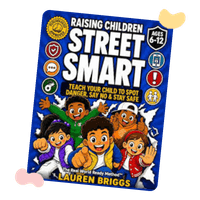 A promising new resource published in May 2026. ‘Most Safety Books Warn Kids About Danger. This One Gives Them the Exact Words, Real Situations, and Weekly Practice to Handle It’ (Amazon)
- Title: “Raising Children Street Smart”
- Written by: Lauren Briggs
- Age Group: 6 – 12 years
- Links to MTOP ⤵️
| Principles | Practices | Learning Outcomes |
|---|---|---|
|
Principles Principle 1: Secure, Respectful and Reciprocal Relationships Encourages children to identify trusted adults, communicate concerns, and seek help when they feel unsafe. It reinforces the importance of supportive relationships and open communication between children and caregivers. |
Practices Intentional Teaching Provides explicit teaching about recognising unsafe situations, responding to peer pressure, setting boundaries, and asking for help. |
Learning Outcomes Outcome 1: Children Have a Strong Sense of Identity Develops children’s confidence, personal boundaries, self-awareness, and ability to trust their instincts. |
|
Principles Principle 2: Partnerships Through discussion prompts, practical scenarios, and weekly practice activities, the book promotes partnership between children, families, educators, and caregivers in building children’s safety skills. |
Practices Learning Through Play Each chapter includes a short practical activity or game designed to help children rehearse and embed safety skills in an engaging way. |
Learning Outcomes Outcome 3: Children Have a Strong Sense of Wellbeing Supports emotional resilience, personal safety awareness, and the confidence to take action when situations feel unsafe. |
About the Book
Designed as a tool for parents – this book is also a fantastic tool for Educators in the OSHC space. Check out some of the great skills you can help the children in your care learn.
- Children were born with an “uh-oh” feeling, and most kids are quietly taught to ignore it
- Shut down peer pressure cold with a single sentence, no argument or excuse
- Why “stranger danger” fails almost every child, and what really works instead
- The real reason good kids freeze in the moment, and the one thing that snaps them out of it
- Spot manipulation while it’s happening, even when it shows up looking like kindness
- A 5-minute game in every chapter that turns each lesson into an automatic reflex
- Meet the “no-secret” rule that makes children almost impossible to groom or manipulate
- How to help children speak up, even when they’re afraid no one will believe them
- Every skill becomes exact words children will actually use when it counts
(Excerpt taken from: Amazon Raising Children Street Smart: Teach Your Child To Spot Danger, Say No, & Stay Safe Even When You Aren’t Around | The Real World Ready Method™ (Ages 6–12) – Kindle edition by Briggs, Lauren . Children Kindle eBooks @ Amazon.com.
Raising Children Street Smart is a practical child safety resource designed to equip children aged 6-12 years with real-world safety skills they can use independently. Developed by parent and teacher Lauren Briggs, the book introduces the Real World Ready Method™, an approach based on the belief that children learn safety skills most effectively through practice rather than simply being told what to do.
The book moves beyond traditional “stranger danger” messaging and instead teaches children how to recognise potentially unsafe behaviours and situations regardless of who is involved. Children are encouraged to develop situational awareness, assess risk, trust their instincts, and identify warning signs that something may not be right. A key concept throughout the text is the “Uh-Oh Feeling”, helping children recognise and respond to their body’s natural warning signals when they feel uncomfortable or unsafe.
A significant focus of the book is helping children develop confidence and assertiveness. Through relatable scenarios involving peer pressure, manipulation, unfamiliar adults, online communication, and everyday challenges, children learn practical responses they can use when faced with difficult situations. Rather than offering vague advice, the author provides specific words, scripts, and strategies children can rehearse and apply in real life.
Content Covered
The book also explores important topics such as body autonomy, personal boundaries, help-seeking behaviours, recognising manipulation, and understanding why secrets can sometimes be unsafe. Children are encouraged to speak up when something feels wrong and to continue seeking support from trusted adults until they are heard.
Activities included
Each chapter concludes with a short activity or game designed to strengthen children’s confidence and turn new learning into practical habits. By repeatedly applying the skills in age-appropriate contexts, children are supported to develop the confidence and competence needed to navigate the world safely.
Overall, Raising Children Street Smart aims to empower children to become active participants in their own safety by developing awareness, resilience, critical thinking, communication skills, and the ability to make safe decisions when trusted adults are not immediately available.
Why We Love It
- Empowers children with practical, real-world safety skills rather than relying on fear-based messages.
- Moves beyond traditional stranger danger approaches and teaches children to recognise unsafe behaviours and situations.
- Provides children with clear language and scripts they can confidently use in challenging situations.
- Builds children’s confidence, resilience, and decision-making skills through realistic scenarios and practice.
- Encourages help-seeking and reinforces the importance of trusted relationships.
- Includes engaging activities that help children turn knowledge into action.
- Supports educators and families to have meaningful conversations about personal safety in a strengths-based way.