Top 4 Early Childhood Books
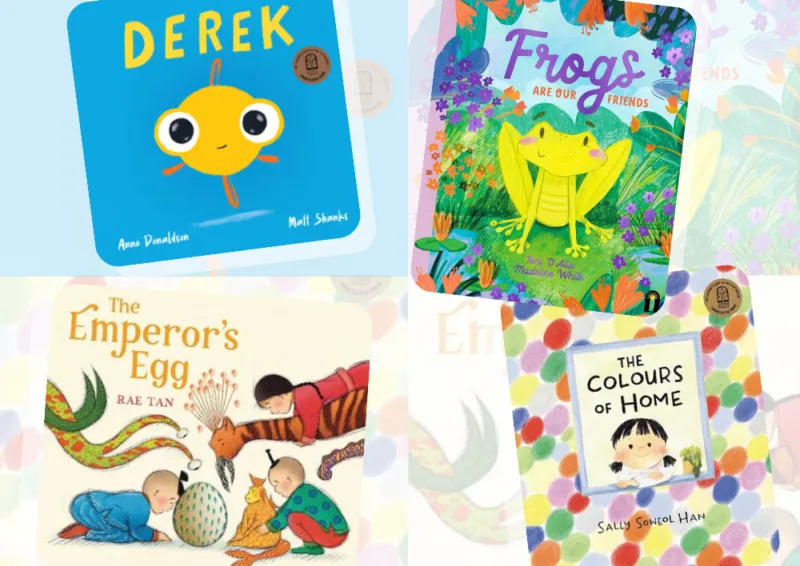
To celebrate Science Week and Book Week, we did some investigating to make you curious about the 2026 top 4 Early Childhood books for ages 0-6, as short-listed by the Children’s Book Council of Australia (CBCA).
“Derek”
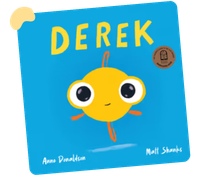
- Title: “Derek”
- Written by: Anne Donaldson
- Illustrated by: Matt Shanks
- Age Group: 0-4 years
- Links to EYLF and MTOP ⤵️
| Principles | Practices | Learning Outcomes |
|---|---|---|
| PrinciplesSecure, Respectful and Reciprocal Relationships | PracticesResponsiveness to Children | Learning OutcomesOutcome 1: Children have a strong sense of identity |
| PrinciplesEquity, Inclusion and High Expectations | PracticesLearning Through Play Play-based learning and intentionality | Learning OutcomesOutcome 4: Children are confident and involved learners |
About the Book
Derek lives in a fishbowl. Derek has lots of questions. “Why is the universe round?”, “Where do bubbles come from?”, “Why does food rain down from above?”
Read along with Derek as he asks lots of questions and sets out to find the answers. Join his adventure fuelled by curiosity, courage and his deep desire for connection
Why We Love It
Derek asks questions – and – we all know that questions are the beginning of every learning journey. Derek sets out to find answers for his questions. He explores, he investigates and he keeps asking questions until he finds what he’s looking for.
Every page is full of colour, but not overly crowded, so it’s easy to read but has lots of interesting imagery to prompt questions. We’re invited to explore Derek’s world inside his fishbowl. This can help children think about their own world – both at home and in school.
The text is simply presented on each page in short statements or as a question. This makes it very easy to read and creates a natural place for educators to stop and allow children to actively participate in the story – by answering the questions. Or asking their own questions.
The door to STEM (Science, Technology, Engineering and Mathematics) is opened wide fuelled by Derek’s investigations. Explore ideas about the universe, the colour of the earth, what are bubbles, to name a few.
From a social connection perspective, Derek’s big question “Why am I alone?” creates a space for educators to explore the ideas of belonging, family and friendship.
Do yourself and your Little Learners a favour by investigating Derek!
Read Aloud
“The Emperor’s Egg”
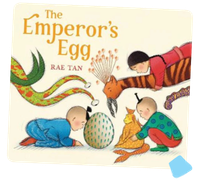
- Title: “The Emperor’s Egg”
- Written by & Illustrated by: Rae Tan
- Age Group: 3-6 years
- Links to EYLF ⤵️
| Principles | Practices | Learning Outcomes |
|---|---|---|
| PrinciplesSecure, Respectful and Reciprocal Relationships | PracticesPlay-Based Learning and Intentionality | Learning OutcomesOutcome 1: Children have a strong sense of identity |
| PrinciplesRespect for Diversity | PracticesResponsiveness to Children | Learning OutcomesOutcome 4: Children are confident and involved learners |
About the Book
Join Ren and his family in a very unusual challenge.
Looking for a worthy successor to his throne, an ageing emperor gives all the children in his kingdom an egg. After 30 days, he will judge what each child delivers to him and then choose his heir.
Ren brings his egg home and takes the best care of it. He reads to it, sings to it, sleeps with it and keeps it warm. Ren waits and waits, but his egg never hatches, while all around him wondrous hatchlings are emerging from other children’s eggs.
What will Ren do? In a hall full of magical creatures, how can Ren present his unhatched egg to the emperor?
Why We Love It
This beautifully illustrated story is a retelling of an ancient Chinese folktale about integrity, courage and patience.
The illustrations are an excellent tool to support investigation. Focus on the children’s faces to draw your listeners into recognising emotions like excitement, hope, disappointment, patience and pride. You might stop in several places through the story and ask your listeners how ‘they’ might feel if they were in Ren’s place?
Ask the children to predict what type of creature might hatch out of the eggs and explore the many different types of fantasy creatures throughout the pages.
Explore the relationships in Ren’s family, as they help him care for the egg. Notice the different things that the children think might help the egg hatch… cuddles, warm blankets, kisses, peace and quiet.
Celebrate diversity by introducing children to Chinese folklore, cultural traditions and different perspectives, helping them develop respect for and appreciation of cultures beyond their own.
Enjoy reading the simple words, and short sentences which flow easily. There are just enough words on each page, so that your listeners can listen while also exploring the detailed illustrations.
This story is a must for your story corner!
Read Aloud
“The Colours of Home”
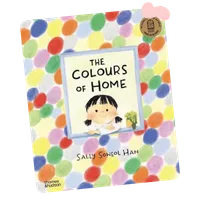
- Title: “The Colours of Home”
- Written by & Illustrated by: Sally Soweol Han
- Age Group: 3-6 years
- Links to EYLF ⤵️
| Principles | Practices | Learning Outcomes |
|---|---|---|
| PrinciplesRespect for Diversity | PracticesResponsiveness to Children | Learning OutcomesOutcome 2: Children are connected with and contribute to their world. |
| PrinciplesEquity, Inclusion and High Expectation | PracticesCultural responsiveness | Learning OutcomesOutcome 4: Children are confident and involved learners |
About the Book
When Bomi moves to a new country everything seems different except for the silver moon.
She misses the colours, sounds and sights of her old home. But slowly, as she investigates her new surroundings in Korea, she notices the colours in her new environment remind her of her old home in Australia.
Why We Love It
Curiosity and investigation go hand in hand in all areas of life! This book encourages children to create links between what they already know – and all the new experiences they have each day, in every part of their lives.
Hand drawn illustrations with traditional Korean techniques capture vibrant colours found in both Korea and Australia. Bomi’s face and body language capture her feelings, which make for great conversation starters. “How do you think Bomi feels?”
Older readers might notice that the colours become more vibrant as the story progresses. And a great question to ask pre-school groups would be: “Why are the colours flying with the aeroplane?”
If you’re looking for a book that helps children connect their learning, investigate texts for meaning and appreciate diverse environments – this is the book you need.
Hear and see the book read out loud.
Read Aloud
“Frogs Are Our Friends”
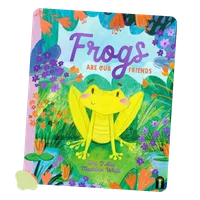
- Title: “Frogs Are Our Friends”
- Written by: Toni D’Alia
- Illustrated by: Madeline White
- Age Group: 3-7 years
- Links to EYLF and MTOP ⤵️
| Principles | Practices | Learning Outcomes |
|---|---|---|
| PrinciplesSustainability (EYLF & MTOP) | PracticesLearning through Play (EYLF) | Learning OutcomesOutcome 2: Children are connected with and contribute to their world (EYLF & MTOP) |
| PrinciplesHigh Expectations and Equity (EYLF) | PracticesIntentional Teaching (MTOP) | Learning OutcomesOutcome 5: Children are Effective Communicators (MTOP) |
About the Book
Down in the garden, away from the sun, a little green frog is having some fun!
Frogs Are Our Friends welcomes us into a beautiful natural garden environment, to investigate the life of one little frog.
Why We Love It
This simply written, beautifully illustrated book is a wonderful way to provoke children’s curiosity about the natural world. It is a marvellous introduction to the science of the environment and animals in their habitat.
The illustrations are brightly coloured to catch the eye but clean and simple. Each page provides a lot of visual information so that children can spend time investigating and learning more about the frog’s natural habitat.
Written with an easy rhyming pattern, in short text blocks, this book is very easy to read for Educators presenting in Storytime. The musicality of the words helps the story flow, so children will be drawn to the story. It is also perfect for new readers, or readers who struggle with long sentence structure.
It has a Fun Facts about Frogs page on the final page providing a great provocation for further investigation projects.