Children’s Book Recommendation
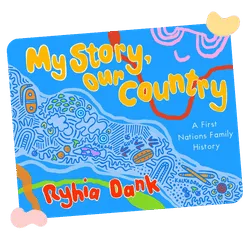
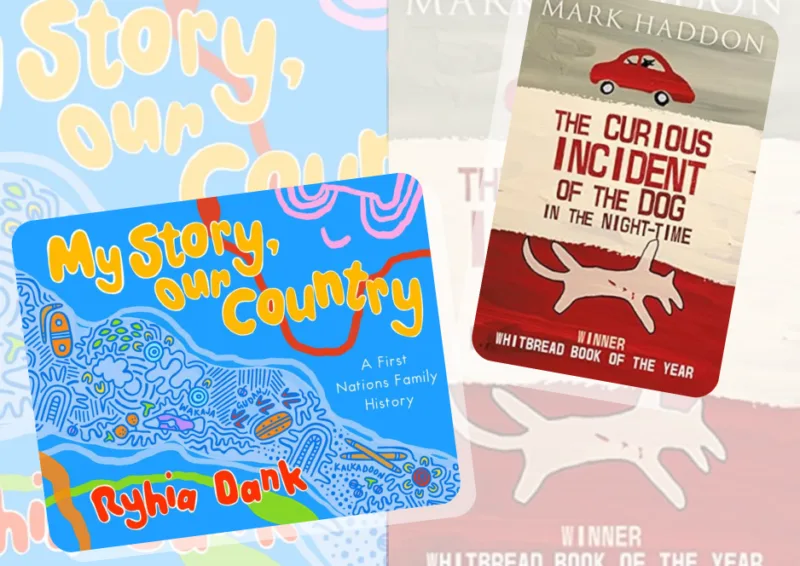
Ryhia Dank is a Gudanji/Wakaja woman from the Barkly Tablelands in the Northern Territory. She uses both written and visual text to tell the story of First Nations peoples’ connection to Country and their ways of sharing knowledge through story.
- Title: “My Story, Our Country“
- Written & Illustrated by: Ryhia Dank
- Age Group: 5+ years
- Links to MTOP:
| Principles | Practices | Learning Outcomes |
|---|---|---|
| PrinciplesPrinciple 1: Secure, respectful and reciprocal relationships | PracticesPractice 1. Holistic approaches |
Learning OutcomesOutcome 3: Children and young people have a strong sense of wellbeing – reinforces belonging, identity and pride, emphasising feeling “comfortable in the skin we have been gifted” and supports children’s emotional wellbeing through affirming culture and building respect. |
| PrinciplesPrinciple 3: Respect for Diversity | PracticesPractice 3. Play, leisure and intentionallity |
Learning OutcomesOutcome 4 Children and young people are confident and involved learners – encourages children to think deeply about history, meaning, symbols and stories. Great prompt to invite questions, discussion and interpretation of visual and written text. |
| PrinciplesPrinciple 4. Aboriginal and Torres Strait Islander Perspectives | PracticesPractice 5. Cultural Responsiveness | Learning Outcomes |
About the Book
Ryhia Dank is a Gudanji/Wakaja woman from the Barkly Tablelands in the Northern Territory. She uses both written and visual text to tell the story of First Nations peoples’ connection to Country and their ways of sharing knowledge through story.
Using her family story as a kind of reference point, the author leads the reader through aspects of First Nations history and culture. She points out that her ancestors painted in caves and on carved on rocks and explains that calling this ‘art’ is a misnomer as the works were actually ways of keeping family history and culture alive – in other words, they were educational stories that had to be read.
The book’s layout is in double-page spreads throughout with the written text places at different places on the pages. There is sometimes written text within the wavy line too, with important messages such as 65,000 years of ongoing living culture. The background colours vary from page to page and add to the narrative such as the deep blue background on the pages where Dank explains the importance of water to her people, the Gudanji.
(extract from My Story, Our Country: A First Nations Family History – Reading Time by The Children’s Book Council of Australia)
Why We Love It
We love My Story, Our Country: A First Nations Family History because it opens the door to a world that many of us don’t fully understand. We are Educators, and it is essential to grow our understanding if we want to embed authentic reconciliation into our everyday practice.
Ryhia welcomes us in to share her family story. In doing so, she provides a whole new way of learning about Australia. She shares that knowledge is stored in Country and that living sustainably is both lore and a responsibility. By presenting storytelling through art, songlines and body markings she opens our eyes to a new way of learning.
Reconciliation is about learning and learning is about investigating, questioning and discussing. Ryhia’s book provides the perfect provocation – using beautiful illustrations, words as art, song line motive and colours as representative of water – our most important resource.
The book’s double-paged layout, with text and images placed differently supports group investigation and discussion. Read it out loud in one sitting to enjoy the rhythm of the language. Break it down and use each double-page as a prompt for deeper discussion.
This story provides many themes for exploration including:
- connection to Country
- caring for the environment
- introduced animal species and their impact
- the concept of cultural continuity – Always Was, Always Will Be
Inclusive practice is well supported as it affirms identity, belonging and connection helping:
- Aboriginal children see themselves represented with pride
- Children from other cultures develop understanding and respect
- Reinforce that Aboriginal and Torres Strait Islander culture is living and ongoing.
Although these are big ideas, they’re presented in a way that is accessible for children and adaptable across age groups, particularly OSHC and mixed-aged settings.
Recommended by: Margaret Walton
Managing Director, Child Education Services
Tel: 08 9225 6516
Educator Book Recommendation
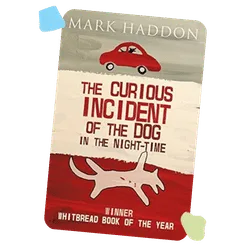
“The Curious Incident of the Dog in the Night-Time” is crime and mystery story told through the eyes of Christopher.
This book gives educators a window into how the world can look through an autistic perspective. It’s not always comfortable, but that’s kind of the point. It challenges how we see behaviour, communication and difference.
- Title: “The Curious Incident of the Dog in the Night-Time“
- Written & Illustrated by: Mark Haddon
- Age Group: Educators
About the Book
Christopher is 15 years old and has Asperger’s Syndrome, a form of autism.
He loves maths, science and Sherlock Holmes but struggles to understand other people.
When he discovers a dead dog on a neighbour’s lawn, he decides to solve the mystery and write a detective thriller about it.
As in all good detective stories, however, the more he unearths, the deeper the mystery gets – for both Christopher and the rest of his family.
Note: (If you love dogs, be aware that there is a detailed factual description provided of how the dog died.)
Why is it a Good Read?
This story provides an insight into how the world is viewed through the Asperger’s lens. Build your understanding of how this different perspective brings with it both successes and challenges.
Insight is a powerful tool to help us think differently, embrace diversity and learn new ways of communicating with those around us – both educators and children alike.
As Educators, we must develop our respect for diversity so we can build inclusion into our daily practise for both the children we support and the educators in our teams.
Reflective questions for you might ask of yourself might include:
- Do I ask myself how colleagues, family and children ‘view their world’?
- How can I communicate differently to better support colleagues, families and children?