In Early Childhood Education and Care, we strive every day to create spaces where children feel safe, supported and confident to explore. But safety isn’t something that happens by accident, it’s something we practice, refine and embed into everyday routines.
Now, as bushfire and cyclone season arrive across many parts of Australia, knowing and practising emergency evacuation procedures is more important than ever.
Emergency preparedness isn’t just about compliance. It’s about equipping educators, children and families with the clarity and confidence to respond calmly and effectively when an unexpected situation occurs. Being ready can save time, reduce risk and ensure children feel safe and supported and that’s true whether you’re facing a planned fire drill or the reality of severe weather.
What the NQS Says and Why It Matters
Under the National Quality Standard (NQS), child safety is non-negotiable.
Quality Area 2 Children’s Health and Safety emphasises that services must safeguard and promote children’s wellbeing, minimise risks and protect children from harm. Safety isn’t just about preventing harm; it’s also about preparing children and educators to respond if something goes wrong.
Within QA2, Element 2.2.2 – Incident and Emergency Management requires services to have written emergency and evacuation procedures that include clear instructions for what must happen in an emergency and an emergency evacuation floor plan that is displayed in a prominent position near each exit.
This expectation connects directly to your service’s responsibility to translate these written procedures into lived practice. It’s not enough to have a document in a binder children, educators and visitors all need to know the steps, roles and expectations when the alarm sounds or a warning comes through.
Practice Leads to Prepared Response
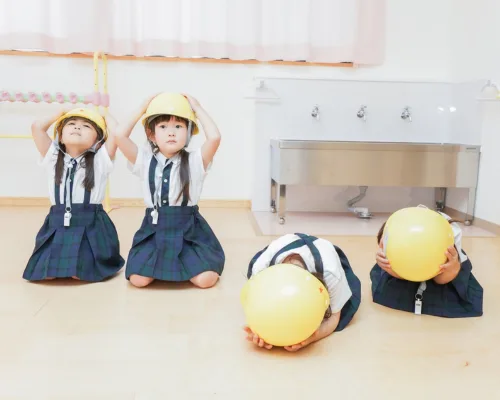
Emergency and evacuation procedures should be reviewed regularly and rehearsed at least every three months, this helps educators and staff handle real emergencies calmly and effectively, reducing risk of harm or injury.
But there’s more to rehearsal than ticking a box.
Your calm, confident responses during practice help shape their understanding of safety as something supported, not scary.
It’s a sign that procedures need to be practiced more frequently and gently, so children can build familiarity and emotional safety over time.
These can be fixed before a real emergency hits.
Bushfire & Cyclone Seasons: Context for Preparedness
In parts of Australia, January to April bring increased risk from natural hazards, bushfires in dry inland and coastal regions, cyclones and severe storms in tropical and northern areas. These seasonal risks are predictable, yet they demand a heightened state of awareness and readiness.
A bushfire or cyclone situation can evolve rapidly. Having clearly understood and practiced procedures means:
- Educators can respond swiftly and authoritatively
- Children feel supported, not overwhelmed
- Families see competence and calm leadership from the service
- The focus stays on safety and wellbeing first
Child-centred preparation acknowledges that every child experiences stress differently. Taking time to practice evacuation in a calm, predictable way, with explanations that fit young learners’ understanding helps children internalise safety as something familiar, not frightening.
Making Evacuation Practice Meaningful
Emergency drills shouldn’t be one-off events.
They should be integrated into the culture of your service with intention and reflection.
Children aren’t just participants they’re learners in the process.
Everyone has a role. Knowing yours reduces uncertainty.
Continuous reflection leads to continuous improvement, which is exactly what the NQS encourages.
Beyond Drills: Emergency Readiness as a Culture
Emergency evacuation practice is one piece of a larger safety culture within education and care environments.
It intersects with risk assessment, supervision, communication planning, family engagement and even the physical layout of spaces.
When rehearsals are consistent and connected to real world context, they become less like a rehearsed task and more like a shared confidence-building exercise.
Prepared, Not Panicked
Rehearsal isn’t about instilling fear, it’s about building calm competence.
In the unpredictable environment of a real emergency, preparedness allows educators to act with clarity and care. It strengthens children’s sense of safety and supports families’ trust in your service.
As we face the seasonal challenge of bushfires, cyclones and severe storms, let’s recommit to practising with purpose, understanding our emergency procedures, reviewing them often, and embedding practice into the rhythm of our service.
When everyone knows what to do and why, we create conditions where safety becomes second nature and that’s a gift to every child and educator in our care.